


Reinventing Precision Bonding: How Pulse Heat and Hot Bar Processes Shape the Future of Micro-Assembly
2025-12-02 11:55Walk into any modern electronics workshop and you’ll likely find one common theme: components are shrinking, tolerances are tightening, and thermal control is becoming the backbone of reliable assembly. In this environment, processes like resistance heat welding, heat pressure welding, pulse heat welding, hot bar soldering, and hot bar reflow welding are no longer optional—they are the quiet engines powering high-density manufacturing.
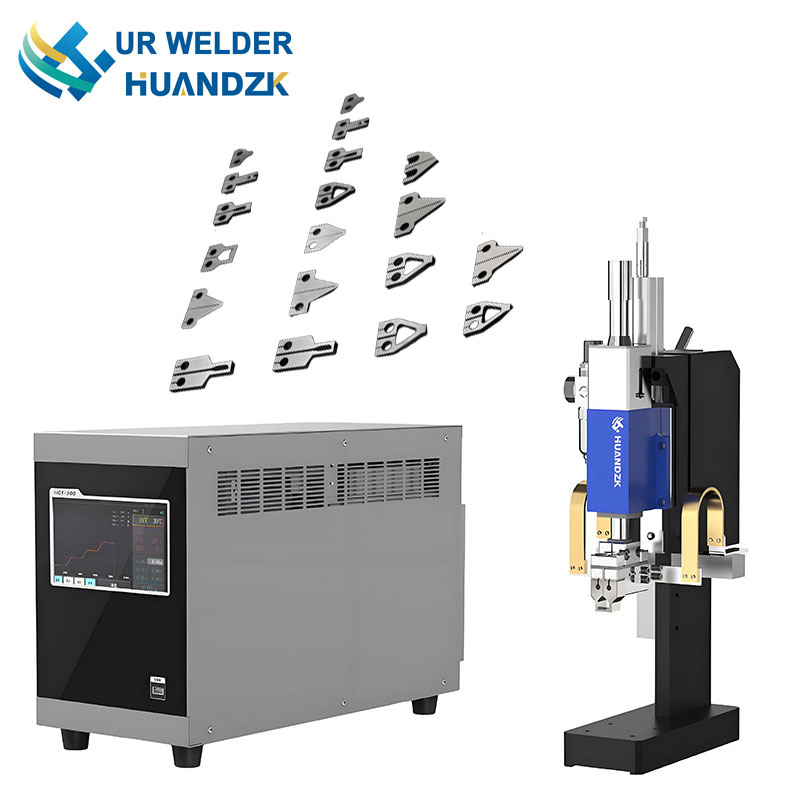
A good starting point is resistance heat welding, a deceptively simple technique that delivers surprising finesse. By generating heat directly at the contact surface, resistance heat welding avoids unnecessary thermal exposure to surrounding areas. Engineers appreciate how resistance heat welding responds immediately to current changes, making it suitable for metal tabs, micro-terminals, shielding plates, and structural electronic parts where tight thermal windows matter. The process feels almost “clean” because only the interface gets hot, not the entire assembly.
Shift the perspective to heat pressure welding, and the story changes from electrical heat to controlled mechanics. Heat pressure welding relies on uniform pressure combined with stable thermal energy to create repeatable bonds. It is the process engineers turn to when they need alignment accuracy and uniform thickness—think laminated foils, flexible circuits, acoustic layers, and delicate multilayer assemblies. The beauty of heat pressure welding lies in its predictability: adjust pressure, adjust temperature, and the interface behaves exactly as expected.
Then comes pulse heat welding, the process that dominates conversations whenever fine-pitch electronics or fragile materials enter the discussion. Unlike continuous heating, pulse heat welding delivers rapid, programmable bursts of energy—fast rise, precise peak, controlled cooldown. This makes pulse heat welding perfect for joining ultra-thin FPCs, soft polymer layers, tiny pads, or assemblies with strict thermal budgets. It’s admired for its discipline; pulse heat welding follows the heating curve faithfully, cycle after cycle, giving engineers a sense of control rarely seen in manual soldering or wide-area thermal bonding.
When solder becomes part of the equation, hot bar soldering steps into the spotlight. Hot bar soldering uses a heated bar to reflow solder uniformly across multiple pads. It’s commonly used for connectors, display terminals, conductive foils, and LED modules where consistent solder wetting is crucial. What makes hot bar soldering valuable is how evenly it distributes thermal energy, preventing localized overheating while ensuring well-formed joints. For production lines that demand repeatability, hot bar soldering is a dependable workhorse.
For even finer control, especially in ultra-dense interconnect layouts, manufacturers rely on hot bar reflow welding. Built on the same foundation as hot bar soldering but enhanced with feedback-driven temperature control, hot bar reflow welding offers remarkable stability. The process excels in applications like driver IC bonding, camera modules, FPC-to-PCB assembly, and micro-connector reflow. Engineers choose hot bar reflow welding when the margin for thermal error is almost nonexistent—when pad lift, warpage, or solder overflow can instantly ruin a batch.
While each process—resistance heat welding, heat pressure welding, pulse heat welding, hot bar soldering, and hot bar reflow welding—operates differently, they share common technical values: localized heating, predictable thermal behavior, and compatibility with thin materials. Together, they form a toolkit that allows manufacturers to assemble next-generation electronics without sacrificing reliability.
Imagine bonding a flexible display ribbon to a rigid PCB with 0.25 mm pad spacing. Or soldering a connector onto a heat-sensitive polymer substrate. Or attaching a micro-metal tab inside a compact battery module. These challenges become manageable only because technologies like resistance heat welding, heat pressure welding, and pulse heat welding offer finely tuned thermal control, while hot bar soldering and hot bar reflow welding provide solder-based reliability when conductive joints are needed.
In a world where products must be lighter, thinner, and more durable, the importance of thermal joining technologies will only grow. Whether it is the precision of pulse heat welding, the uniformity of hot bar soldering, the stability of hot bar reflow welding, or the direct heat efficiency of resistance heat welding and heat pressure welding, these processes together shape the invisible infrastructure of modern electronic manufacturing.