



Precision Resistance Welder Solutions with Intelligent Welding Power Supply and Temperature Curve Control
2025-12-19 19:55Precision Resistance Welder Solutions for Advanced Industrial Manufacturing
In modern high-end manufacturing, product miniaturization, material diversity, and strict quality standards are driving strong demand for advanced welding technologies. A precision resistance welder has become a critical solution for industries that require repeatable weld quality, minimal heat impact, and accurate energy delivery. When combined with an intelligent welding power supply, advanced micro welding equipment, a fully integrated automatic welding system, and closed-loop temperature curve control, manufacturers can achieve a new level of welding stability and process optimization.
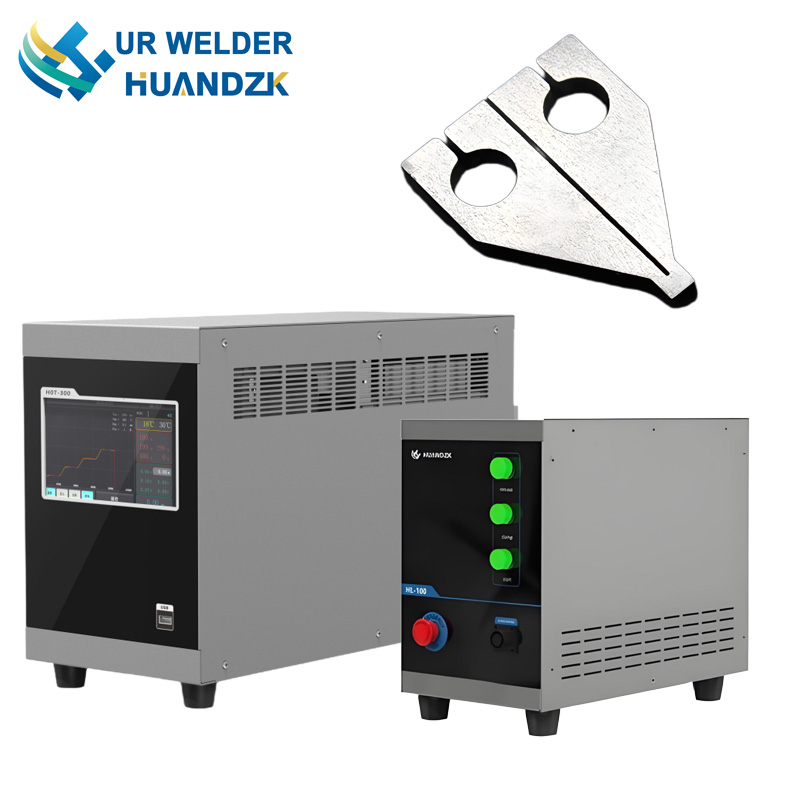
A precision resistance welder is specifically designed for applications where welding accuracy, consistency, and process control are more important than brute force. Unlike conventional resistance welding machines, a precision resistance welder focuses on precise current regulation, millisecond-level timing control, and adaptive feedback to ensure every weld nugget meets strict specifications. This makes it ideal for electronics, automotive components, medical devices, battery packs, sensors, and fine metal assemblies.
At the core of every precision resistance welder is a high-performance welding power supply. The welding power supply determines how accurately welding current, voltage, and energy are delivered to the workpiece. Advanced welding power supply designs, such as MFDC, HFDC, or inverter-based architectures, provide fast response times, low ripple output, and excellent repeatability. A stable welding power supply ensures that even under fluctuating line conditions, the welding process remains consistent, reducing spatter, electrode wear, and defective welds.
For applications involving thin materials, fine wires, terminals, and micro components, micro welding equipment plays a decisive role. Micro welding equipment integrates a precision resistance welder with fine electrodes, high-resolution sensors, and ultra-short pulse control. This allows reliable welding of copper, aluminum, nickel, and dissimilar metals without overheating sensitive components. In battery tab welding, PCB connections, motor commutators, and sensor assemblies, micro welding equipment combined with a stable welding power supply ensures both electrical performance and mechanical strength.
As production volumes increase and labor costs rise, manufacturers are rapidly adopting an automatic welding system. An automatic welding system integrates a precision resistance welder with robotic motion control, fixtures, vision systems, and real-time monitoring. By embedding a welding power supply into an automatic welding system, manufacturers achieve fully synchronized control between movement, pressure, current, and time. This level of automation not only improves productivity but also guarantees weld consistency across thousands or millions of cycles.
One of the most important advancements in modern welding technology is temperature curve control. Traditional resistance welding often relies solely on current and time settings, which may not fully reflect the real thermal behavior of the weld zone. Temperature curve control enables the welding system to monitor and regulate the actual temperature rise and cooling profile during the welding process. By implementing temperature curve control within a precision resistance welder, manufacturers can prevent overheating, reduce material deformation, and improve metallurgical structure.
Temperature curve control is especially valuable in micro welding equipment, where even slight temperature deviations can damage components or compromise performance. When temperature curve control is integrated into the welding power supply, the system can dynamically adjust output in real time. This ensures that each weld follows a predefined thermal profile, improving repeatability and long-term reliability. In an automatic welding system, temperature curve control also enables data logging and traceability, supporting quality audits and continuous process improvement.
From an industrial perspective, combining a precision resistance welder, an intelligent welding power supply, advanced micro welding equipment, a flexible automatic welding system, and closed-loop temperature curve control creates a comprehensive welding solution. This integrated approach reduces scrap rates, minimizes downtime, and extends electrode life, delivering measurable cost savings over time.
In conclusion, the future of resistance welding lies in precision, intelligence, and automation. A precision resistance welder supported by a high-performance welding power supply, specialized micro welding equipment, a fully integrated automatic welding system, and advanced temperature curve control provides manufacturers with the tools needed to meet increasingly demanding quality standards. For industries seeking reliable, scalable, and data-driven welding solutions, this combination represents the optimal path forward.