



Intelligent Resistance Welding Systems for Automotive and Precision Manufacturing
2025-12-17 16:39Modern manufacturing demands welding solutions that combine precision, stability, and intelligent control. From automotive body assembly to electronic interconnections and industrial blade joining, advanced resistance welding technology has become the foundation of reliable production. At the core of this evolution is the welding process control device, enabling manufacturers to achieve consistent quality, real-time monitoring, and data-driven optimization across multiple welding applications.
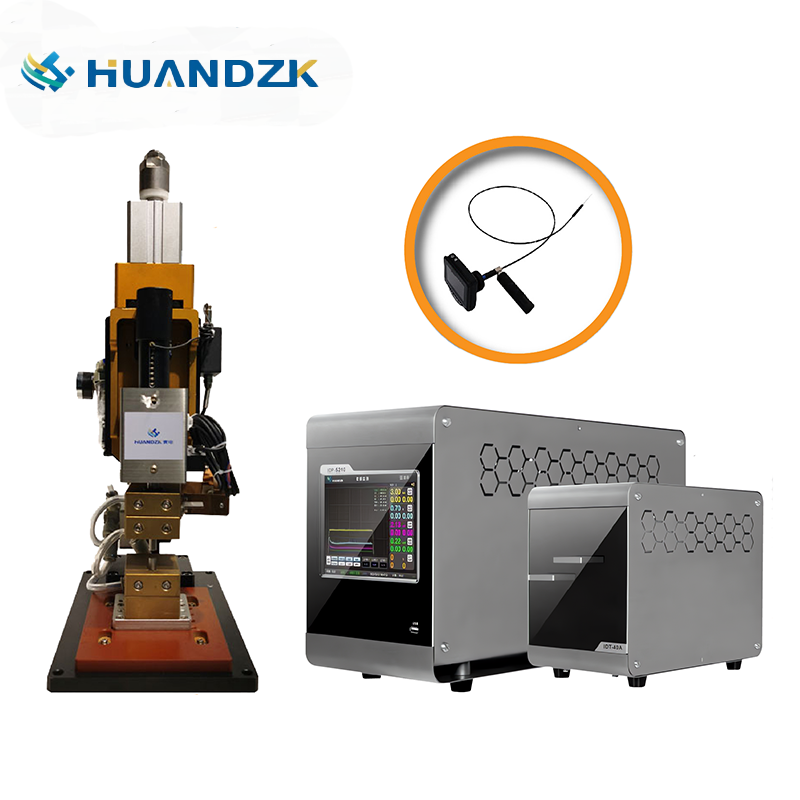
In the automotive industry, a high-performance resistance welding system for automotive production is essential for meeting strict safety and durability standards. Vehicle bodies, battery packs, and structural components rely on repeatable weld quality under high-volume conditions. By integrating an advanced welding process control device, manufacturers gain full visibility of current, voltage, force, and time parameters during every weld cycle. This level of control ensures stable nugget formation, reduced spatter, and long-term structural integrity, even when working with high-strength steel and lightweight alloys.
High frequency resistance welding further enhances productivity by delivering rapid current response and precise heat control. Compared to conventional welding methods, high frequency resistance welding minimizes thermal distortion while improving joint consistency. This technology is widely used in applications that require fast cycle times and clean weld appearance, especially in automated production lines. When paired with an intelligent welding process control device, high frequency resistance welding becomes a powerful solution for manufacturers seeking higher throughput without sacrificing quality.
Electronics manufacturing presents its own set of challenges, where accuracy and low thermal impact are critical. PCB to FPC welding requires extremely controlled energy delivery to avoid damage to sensitive components and conductive traces. A modern resistance welding system equipped with high frequency resistance welding capabilities ensures strong electrical connections while maintaining material integrity. With real-time feedback from the welding process control device, PCB to FPC welding achieves stable resistance values, consistent bonding strength, and full traceability for quality assurance.
Beyond automotive and electronics, resistance welding also plays a vital role in industrial tooling and cutting equipment. A band saw blade welding machine must produce joints that withstand continuous mechanical stress, vibration, and thermal cycling. Using a robust resistance welding system for automotive-grade performance, a band saw blade welding machine delivers uniform weld seams with excellent tensile strength. Intelligent monitoring ensures that each blade joint meets strict performance criteria, reducing failure rates and extending tool lifespan.
What truly differentiates modern welding solutions is the integration of digital intelligence. A welding process control device transforms traditional equipment into a smart manufacturing system. It not only monitors welding parameters in real time but also stores data for analysis, process optimization, and predictive maintenance. Whether applied to high frequency resistance welding, PCB to FPC welding, or a band saw blade welding machine, intelligent control reduces downtime and improves overall equipment effectiveness.
As global manufacturing moves toward automation and Industry 4.0, resistance welding systems must adapt to increasingly complex production requirements. A flexible resistance welding system for automotive use can easily be adapted to electronic assemblies and industrial applications, providing manufacturers with a scalable and future-proof solution. High frequency resistance welding, combined with advanced control technology, supports seamless integration with robotic systems and automated production lines.
In conclusion, the combination of a welding process control device, a reliable resistance welding system for automotive production, and advanced high frequency resistance welding technology defines the next generation of welding solutions. From PCB to FPC welding in electronics to heavy-duty applications such as a band saw blade welding machine, these systems deliver precision, efficiency, and long-term reliability. For manufacturers focused on quality, traceability, and competitive advantage, intelligent resistance welding is no longer an option—it is a necessity.