



Automotive Resistance Welding Systems for High-Volume Vehicle Manufacturing
2025-12-13 11:12The Pivotal Role of Advanced Resistance Welding Techniques in Modern Automotive Manufacturing
The automotive industry stands as a beacon of innovation, continuously evolving to meet demands for safety, efficiency, and sustainability. At the heart of this transformation lies a suite of specialized welding processes that ensure structural integrity while optimizing production speed. Among these, automotive resistance welding—particularly spot, projection, and seam welding—has emerged as indispensable for crafting durable, high-performance vehicles. This article explores how these techniques are reshaping automotive manufacturing, from car body assembly to precision component fabrication.
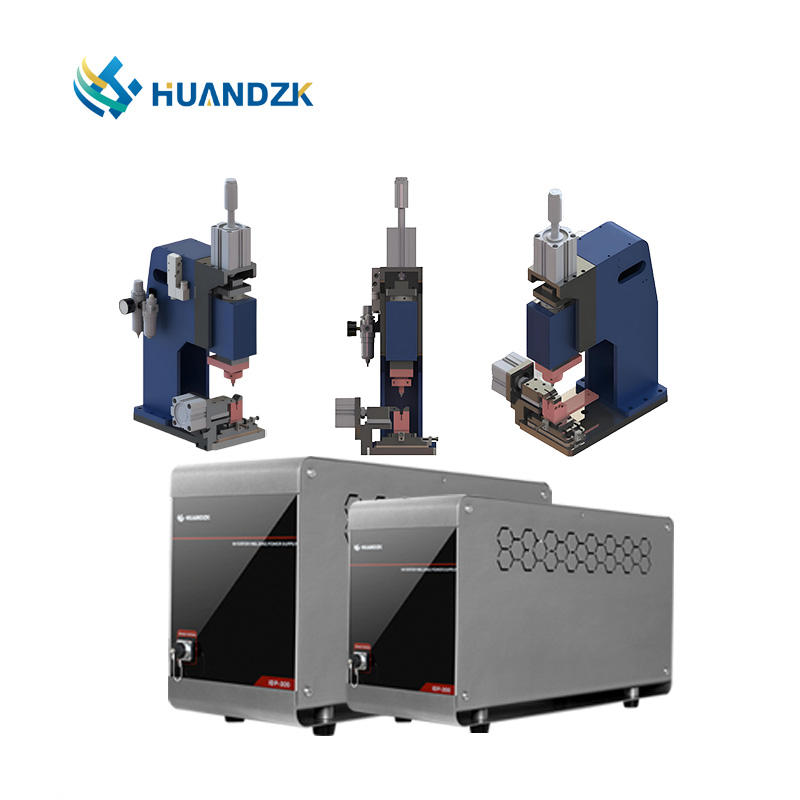
Automotive Resistance Welding: The Foundation of Vehicle Durability
Automotive resistance welding harnesses electrical current to generate localized heat, fusing metals without the need for filler materials. This method is celebrated for its speed, precision, and cost-effectiveness, making it a cornerstone of modern car production. Unlike traditional arc welding, resistance welding minimizes thermal distortion, ensuring parts retain their shape and strength. For automakers, this translates to lighter, safer vehicles that meet stringent global safety standards.
Spot Welding: The Backbone of Car Body Construction
When it comes to assembling car bodies, automotive spot welding reigns supreme. This process involves applying pressure and electrical current at discrete points to join overlapping metal sheets, creating a series of “spots” that collectively form a robust bond. A single vehicle may feature thousands of spot welds, each critical to structural rigidity.
Spot welding’s dominance stems from its ability to handle high-volume production with unmatched consistency. Automated systems equipped with robotic arms can execute hundreds of welds per minute, ensuring uniformity across assembly lines. Moreover, advancements in servo-driven spot welding guns have enhanced control over electrode force and current, reducing defects like burn-through or incomplete fusion. This precision is vital for lightweighting initiatives, where aluminum and high-strength steel alloys are increasingly used to improve fuel efficiency without compromising safety.
Projection Welding: Precision Engineering for Auto Parts
While spot welding excels at joining flat sheets, projection welding for auto parts addresses more complex geometries. This technique involves creating raised projections—or “nubs”—on one component, which concentrate heat and pressure during welding. The result is a strong, localized bond ideal for attaching brackets, fasteners, or sensors to irregular surfaces.
Projection welding’s versatility makes it indispensable for automotive subassemblies. For instance, it’s widely used to secure seatbelt anchors, exhaust system components, and battery trays in electric vehicles (EVs). The process’s ability to join dissimilar metals—such as copper to steel—further expands its applications, enabling innovative designs in EV battery packs and powertrain systems.
Seam Welding: Ensuring Leak-Proof Automotive Components
For applications demanding airtight or watertight seals, seam welding for automotive components delivers unparalleled reliability. This method creates a continuous weld along the edge of two overlapping sheets, forming a hermetic bond that prevents leaks. It’s commonly employed in manufacturing fuel tanks, oil pans, and HVAC ducts, where even minor breaches could compromise performance or safety.
Seam welding’s efficiency lies in its automation potential. Rotary seam welders, for example, rotate cylindrical parts (like mufflers) under electrodes, producing a uniform weld in a single pass. This reduces labor costs and enhances throughput, critical for meeting the demands of global automotive supply chains. Additionally, modern seam welders incorporate real-time monitoring systems to detect defects early, ensuring compliance with industry certifications like ISO/TS 16949.
The Future of Automotive Welding: Innovation Meets Sustainability
As the automotive sector pivots toward electrification and sustainability, resistance welding techniques are evolving to meet new challenges. For instance, spot welding is being adapted for ultra-thin aluminum alloys used in EV battery enclosures, requiring precise control to avoid damaging delicate materials. Similarly, projection welding is optimizing connections in solid-state batteries, where thermal management is paramount.
Moreover, manufacturers are integrating Industry 4.0 technologies—such as AI-powered quality inspection and IoT-enabled equipment—to enhance welding precision and reduce waste. These innovations not only boost productivity but also align with circular economy principles by minimizing material scrap and energy consumption.
Conclusion
From the chassis of a sedan to the intricate components of an EV battery, automotive resistance welding techniques like spot, projection, and seam welding are the unsung heroes of vehicle manufacturing. Their ability to combine strength, speed, and adaptability ensures that modern cars meet—and exceed—the expectations of safety, performance, and sustainability. As the industry continues to innovate, these processes will remain at the forefront, driving progress toward a smarter, greener automotive future.
By investing in cutting-edge welding technologies, automakers are not just building vehicles; they’re crafting the foundation of tomorrow’s mobility ecosystem. Whether you’re a manufacturer seeking to optimize production or a consumer prioritizing durability, understanding the role of resistance welding is key to appreciating the engineering marvels on our roads today.